Friday, February 1, 2013

The Pit Dragon Trilogy, Part 2: The Snatchling

So no sooner do I make that post the other day than I find myself watching You've Got Mail and Meg Ryan's character says this:
When you read a book as a child, it becomes a part of your identity in a way that no other reading in your whole life does. 
It was like the universe knew what I was up to.  But that's no surprise.  It's a tricky one, that universe.


I don't remember this cover of Heart's Blood (Book #2) at ALL.  But this must have been the cover of the copy I read because I read the entire series before the second edition came out (which is the edition I own).  I think because I read Heart's Blood the least out of the original trilogy, I didn't have as much experience with this cover.  What I mean by that is that I've read Books 1 and 3 quite a few times a piece, but Heart's Blood is the one I really slogged through.  Probably because there's the least amount of dragons and and a very large portion of the book is dedicated some political plot that I STILL DON'T UNDERSTAND.  Yes, I am 23 years old and very nearly have an advanced degree, and I still don't undersand a plot point in a book written for children.

Cue my earlier point about being able to look past flaws in books you loved as a kid.

So Post #1 was all about my love the series and its place in my life.  But I realize I never explained what the series is about.

The story takes place on Austar IV, a distant planet that started out as a penal colony but has evolved into a society with a form of indentured servitude called bondage.  Most notable about the planet are the existence of dragons (which are trained to fight in the Pits and serve as the primary economic activity of the planet) and Dark-After, a period of 4 hours of extreme coldness in which no human can survive.  The books follow Jakkin Stewart, a teenager stuck in bondage, as he steals and raises a dragon to fight in the Pits.  But then the series takes some sharp twists and turns and politics, freedom fighters, mind-reading, and cave people to deal with.  Also, a real-live Strong Female Character, Akki (see: here).

My annotation for Dragon's Blood is as follows:

Born into slavery, Jakkin's only way out is raising a dragon to fight in the Pits. So when he snatches an uncounted hatchling at the nursery, Jakkin must link with his dragon and teach it to fight if he has any hope of buying his freedom.

So in doing an annotation, the goal is to boil a book down to its core, and distill it down to 35-50 works.  Ostensibly, this sounds easy, but it is SERIOUSLY time consuming.  You have to think a lot about the book and decide what THE most important thing is, because that's probably all you have time to say in the annotation.

As I got to thinking about Dragon's Blood, I realized how...unique of a book series it is part of.  The cover for Dragon's Blood says it's a Fantasy (and so does the bibliographic subject headings on the copyright page), but that's not quite right of a descriptor.

Sure, there's dragons in it, and everyone's like "Dragons! Must be fantasy!" But the more I thought about, there's a LOT of science fiction in this series, too.  Each book begins with an encyclopedia entry for some worldbuilding, and it's very science-fictiony.  Talk of planets, the Federation, and starships.

And then it hit me: the Pit Dragon books are a classic example of genre-bending.  Which is interesting, because the first book was published in 1982, and genre-bending is considered a recent trend.  Not that there hasn't been genre-bending before, it's just becoming more ubiquitous, particularly in "hard" genres like fantasy and sci-fi.

Which makes my love for these books all the more unique for me.  Because I don't read sci-fi.  At all.  I read a lot of dystopian lit, but those aren't true sci-fi (and most people consider dystopia its own genre nowadays).  The only science fiction book I've read and enjoyed was the Across the Universe series, and that was heavy on the dystopia, so it had help.

So why do I love these books?  And the end of the day, it comes down to one thing:

Jakkin and Akki.

I've always read books for relationships.  (This explains why my Romance Fiction and Its Readers class is basically the best class of all time for me) Even if a book wasn't about a relationship
Very rarely do I enjoy books that don't have a love story in them.  The love between the people can be MESSED UP (see: my love for Gone Girl and Gone with the Wind), but there still has to be a romantic component to their relationship.  And part of me used to feel like that was mega-dumb, but now that I've done research into the Romance fiction thing, I have ABSOLUTELY NO SHAME in admitting that.

But I'm getting off track here.

I think the Pit Dragon Trilogy were the first books I read where a serious romantic relationship was a key plot point.  Akki chooses to stay at the nursery to help Jakkin achieve his dream.  Jakkin's motivation in the second book stems entirely from wanting to get back to Akki.  And it's Akki and Jakkin's intense connection to each other that saves them in the third book.

These are two people who are wrapped up in one another, and the things they do for each other just makes my heart melt every. single. time.  And for being a children's book, things get pretty intense between these two (not so much physically, but emotionally).

And it's my love for Jakkin and Akki as a couple that really drives my love for this series.  Which is why, despite the faults of the 4th book, I am able to completely forgive it with a single line on the last page.  Yeah, I root for this couple THAT MUCH.

Had this series been written today, there would have probably been a love triangle thrown in there, but alas, this book is old enough to run for Congress and therefore does not fall prey to the YA pitfalls that happen so often today.  It's just two people, being in love. And their love isn't shallow--they have problems, and they get over them.  Nothing petty gets between them.

Despite the dragons, it's probably one of the most realistic portrayals of a relationship I've come across.

And yeah, it's totally swoon-worthy.

I REGRET NOTHING.

To be continued...


Sunday, January 27, 2013

The Pit Dragon Trilogy, Part 1: The Hatchling

Whoa, so this started out as one post, but then that turned into the mega post OF DOOM, so I've split it into three (hopefully) manageable posts.

So the story begins with my final assignment in my Children's Library Materials class, which was a genre bookmark.  My initial reaction was to do Fantasy novels for boys, but I quickly realized I hadn't done enough reading to get 10 annotations, so I switched it to High Fantasy for grades 5-8.  I was able to do eight annotations with books I'd read in the past, and the other two came from graphic novels (because I feel very strongly about encouraging that storytelling format).

Anyways, the point here is that this assignment had me doing an annotation for one of my favorite books.

Dragon's Blood by Jane Yolen
I have included here the original cover of the book because a) it's hilariously awful and b) this is the cover of the copy I originally read.

Dragon's Blood is the first in the Pit Dragon Trilogy (okay, there's actually four books and it's called the Pit Dragon Chronicles now but it was the Pit Dragon Trilogy for most of my life so that's what it'll always be to me even if that doesn't really make sense.).  It's classified as children's literature, but I think if it had been published now, it'd totally be YA, as there are MANY references to drug use and brothels in the course of the series.  This will come up later.

I was first introduced to this book by my oldest brother, Ben.  I was 10 years old and in 5th grade, and I needed a book.  He said "this book was pretty cool," and off I went.  By that point, the whole series (at that point it was just a trilogy) had been published and I just DEVOURED it.  It had everything I wanted in a book--magic, romance, adventure, intrigue.  I must have read those three books at least five  times each.  A Sending of Dragons, the third in the series, was my favorite.

I read more of Jane Yolen's stuff, but to this day, nothing of hers gets me like the Pit Dragon Trilogy.  Anyways, when I was a young lass on the pre-YouTube, pre-Social Network internet, I spent a lot of time looking at author websites. I just liked to know about books (shame I couldn't turn that into a career OH WAIT).  So I looked up Jane Yolen and information about this book series and she always had in the FAQ in her website that she "considered writing a fourth" book to the series.  It was always a big if.

But for about 10 years, I sort of clung to that hope.  After all, my mom waited 12 years for Jean Auel to publish the conclusion of the Earth's Children's series.  I could wait.  And I could wish that there would be that fourth book.

And then Jane Yolen finally wrote it.

The 10-year-old inside of me FREAKED OUT.  I remember tearing through this book in a matter of hours, and until recently, I'd only read it once.

So when I did this annotation for class, I decided to re-read the whole series.  And boy, did I have some thoughts about it, especially reading it as an adult.  I didn't have as many FEELINGS about books 1-3 as I did about book 4 (which Post #3 will be about).

But I think that's because books 1-3 are part of the mythology of my childhood.  I read a LOT as a kid (and part of me regrets not keeping a list of every single book I read) and the Pit Dragon Trilogy was one series I read over and over and over.  So I can't really evaluate them objectively as an adult.  Because I have been to that world and back so many times that I can look past all the faults and plot holes and inconsistencies.

And I think we all have books like that.  Books we read and loved as kids, but when we re-read them as adults, we realized they weren't as great as we thought they were.  But that doesn't bother us, because those books will always be as magical to us as they were when we were kids.  And even if we know their faults, we don't really see them when we read the book.  Because not only does the book take us to a new world, but it takes us back to who we were when we first read them.  Back to being a kid again.

When you have a degree in English, it's easy to be overly critical of a book when you read it.  It's difficult to switch off that critical part of your brain, because for years, that's how you had to read for school.  It's a hazard of the degree.  And that's what makes these childhood books so important.  They take you back to a place where all you did was read for pleasure.  For escape.

Being an adult sucks sometimes.  And books that take you away from that--even if for only 300 pages or so--are always worth overlooking any faults.

Book #4 is not so lucky.

To be continued....

Thursday, December 20, 2012

Always Alice

There has always been Alice.

We went to the library a lot when I was a kid.  A lot.  Now that I work up in circulation, I realize that my family was the one the library assistants probably hated.  Baskets upon baskets of books. That was us.  My mom read from the children's section a lot.  She was the one who found Alice.

The Alice McKinley series is a long-running series by Phyllis Reynolds Naylor.  It follows Alice McKinley from age 8 to 60.  The majority of the series, being written for young people, focuses on age 8-18. There has been one book in the series per year for the past 25 years.

My mom knew I'd like Alice.  I think the time I first read her, Alice was just a few years older than me. Now, I'm older than her, and it's me, not my mom, finding the newest Alice books at the library and checking them out.

I can't remember a time where I went to the library and didn't know about Alice.  At various points in my life I have been both older and younger than Alice.  For the past six or so years, I've been older than Alice.  And the books don't have the same appeal as they once did, but I still like reading them.  After all, I did grow up with her.  I am her.

Next May, Always Alice, the final book in the series, will be published.  It truly is the end of an era for me.

The Alice series was the first series I remember DYING to read.  My mom would read the books before me to make sure they were appropriate, and I remember not being able to read Reluctantly Alice until I was in sixth grade. I couldn't wait to read those books.  And I remember when I got the go-ahead to read the newest Alice book without my mother's permission.  It was Alice on the Outside, and that cover (the original one, with the artwork of Patrick and Alice going in for the kiss) is burned into my brain.

Being able to read Alice on the Outside marks for me, when I was allowed free and full access to the library.  That I was allowed to make whatever reading decisions I wanted.

Alice means a lot to me in the mythology in my life as a reader.  The thought of not having a new book of hers to read for the first time in my entire life?  That's heavy.

I guess, in the end, it comes down to what I wrote in my Reader Profile for my Children's Library Materials class:
Reading Alice made me want to grow up sooner, partially because I thought Alice was just so cool and did such fun things, and partially because there were some books in the series my mom would not let me read until I was older.  At various points in my life, I have been both older and younger than Alice, and it is the one book series from my childhood that has not yet ended. The last book in the series comes out next summer, and that, I think, will mark the end of my childhood.  Not the fact that I am in my twenties and can rent a car—no, Alice finally growing up.  Alice was a friend who was always there—she made me laugh, cry, and no matter how embarrassing I thought my life was, Alice always did something way worse.   More than a small part of me will be sad to let her go next summer.

Sunday, December 16, 2012

So I'm Not Going to Make It. Again.

In a turn of events that surprises no one, I'm not going to make 100 books this year either. I thought I had a real good chance, what with the three classes I took this year that were hardcore reading intensive.  And to be fair, if I were counting all the picture books and graphic novels I read this year, I'd have a 100 books easy.  But there's no challenge in that.  Not saying those books aren't worthy or anything, but it doesn't feel like so much of an accomplishment when you can knock out 25 books in a day.

So why did I fall short this year?  Honestly, I think it was that intense reading that did me in.  The fact is (and this I know well), that reading that much that fast really burns you out. Not that I'm turned off reading for good, but when reading is what you have to do, it's not something you choose to do when that obligation is over.  From February to April, I had read at least 3 books a week for school.  Sometimes five.  And every Wednesday (except for one), I had to read an entire book just to stay on top of things.  After all that reading is over with, sometimes you just want to sit and do nothing.

Am I disappointed?  Not really.  I'll still make 80 books easily, which totally shatters my personal best of 63.  And by personal best, I mean since I started keeping track of my reading in May 2008.  And I still cannot fathom how I only read 39 books one year.  I mean, that just doesn't sound like me AT ALL.

I'll be doing it all again next year.  It'll happen for me, someday.  I'll squeeze those 100 books into a single year.  Will it be next year?  Given that I still have at least one more reading-heavy class to go (Romance Fiction and Its Readers, aka THE BEST CLASS EVER), probably not.  But it never hurts to have that goal.

I'll get there.  Someday.

And hey, by then, I may even be better at this whole blogging thing.

Wednesday, October 3, 2012

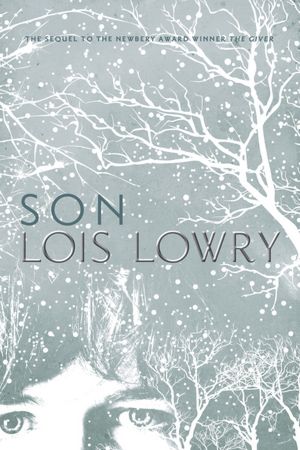
59/100: Son by Lois Lowry

So first things first: The Giver is one of my favorite books.  It is, hands down, in my opinion, the best children's book ever written.  It is also probably the best dystopian novel EVER.  It is the standard by which I judge all other dystopian novels.

And I love the other two books in the series, Gathering Blue and Messenger.  And true, Messenger is a little messy at times, but in my mind, it does tie up the series.

But then I found out she wrote a fourth book.  I FREAKED.  In a good way.  Actually I was in my Teen Library Materials class and we were discussing dystopias and of course, The Giver came up.  I mentioned it was one of my favorites and another girl casually mentioned "You know she's coming out with another book, right?"  I SQUEALED with delight, promptly minimized the e-classroom and bought the book on Amazon.  Let's just ignore the fact that I'm a terrible online student, please.

And finally, after six months of waiting, I got to read Son.

First off, I was surprised to find that Son is quite a bit larger than The Giver or any other books in the series; it clocks in at 400 pages, almost twice that of The Giver.  I'm totally okay with that though, I haven't met a Lois Lowry book I don't like.

FANGIRL MOMENT: I think Lois Lowry is possibly the greatest children's book author of the 20th/21st century.  Her range is absolutely astounding.  The Giver breaks my heart every time I read it, and I fall in love with it over and over again each time I read it.  But her Sam Krupnik series is so hilarious there are TEARS OF LAUGHTER streaming down my face every time I read it.  Seriously, the woman has mad skills and I want to be her when I grow up.

Anyways, Son is the story of Claire, a Birthmother from the community featured in the The Giver.  The book covers quite a large span of time (about 15 years), starting with the action running parallel to The Giver, then to Messenger, and finally, seven years after the events of Messenger.  Part 3 also tells the story of Gabe, the baby Jonas takes with him when he leaves the community.  While it was INSANELY hinted at in the previous 2 books that Jonas had survived his escape from the community, in Son Jonas is actually a major character so you know he survived.

I know a lot of people are disappointed that Lowry confirmed that Jonas survived The Giver.  But in mind, Jonas always survived.  Personally, I never thought that ending was all that ambiguous to begin with, especially when you consider what "Elsewhere" really means in the context of the book.  There's about a thousand other things that make The Giver so interesting.  Part of what makes it so fascinating is that you have this EXTREMELY varied world.  On the one hand, the community where Jonas, Gabe, and Claire live is very technologically advanced.  But the villages that Kira and Water Claire come from are rustic, almost medieval.  What the hell happened here? How did these varied societies come into existence?  But we never find that out.  That alone is worth hours of speculation.

Anyways, the end of part 1 of Son takes place the same time that the The Giver ends.  But because Claire loses her memory, all we know about that time is that it's "hazy." We never actually find out what happens to the community. Part of me hates the fact that we're never told what happens to the community.  Or what happens to The Giver himself.  But the other part of me thinks that's part of the beauty of this series.  The most we get is a line in Messenger, where Jonas tells Matty that he was sent all the Giver's books from the community, so he believes things have changed for the better.  But he simply believes.  He doesn't know.  So the reader doesn't know either.  On the one hand, it's maddening, especially since we're given a chance to find out in Son, given the timeline of events in the book.  But on the other hand, it's just absolutely brilliant of Lowry.  She maintains the mystery of The Giver.  So maybe the question is no longer "Did Jonas survive?" but "What happened to the community?" Which, in my mind, was the far more important question.

I guess why I think her dystopias are so amazing are the fact that she doesn't tell you everything.  Most people agree that the beauty of dystopias are that they make you think about the society that you're in, and if our society could become that place.  Recent dystopias often fill in those blanks for you, explaining how society arrived at that state (I'm looking at you, Suzanne Collins).  But Lois Lowry doesn't, and there are many possible conclusions that can be supported by the text.  IT'S FUCKING BRILLIANT, PEOPLE.

I realize that I've talked mostly about The Giver here, but let's face it, I could talk about that book for DAYS.  IT'S AMAZING.  But Son is a nice companion to the series.  It provides answers, sure, but it still leaves many more questions for readers to speculate on.  Do I think it's the end of the series?  Perhaps.  But then again, I thought the same thing about Messenger and was treated to Son eight years later.  I'm sure Lois Lowry is always willing to leave the door open.

Wednesday, August 15, 2012

52/100: Gone Girl

So school's starting again on Monday (boo).  And, depending on my reading list for Children's Library Materials, I should be able to make my goal of 100 books this year! I hope.  We all know reading-related disasters could happen at any time.

Anyways, I was reflecting tonight over the best book I read over the summer.  And, really, there was no contest for the winner:


Gone Girl by Gillian Flynn

Now, I don't normally read suspense--and indeed, when I had to read a suspense novel for class last semester I wasn't really impressed with the book I chose.  But this book piqued my interest for an entirely different reason: people kept letting it go overdue.  Most people are pretty on top of renewing their library materials, but for some reason, when I told people this book was overdue, they'd say "I know, but I just HAVE to finish it."

Okay, I thought.  This book must be good if people are willing to pay fines to finish it.

So, without knowing anything about the book (I mean, I hadn't even read the synopsis on the jacket), I decided to put it on reserve.  But then I saw there were like 190 reserves on it so I said screw it and decided to wait.

But then! As if the library gods knew, it came through as a donation.  When I saw it on our for sale shelf the next day, I snapped it up.  If it's worth 10 cents a day to read, surely it was worth $3 to own?

OH MAN YES IT WAS.

This book is MESSED UP.  I mean, REALLY MESSED UP.

The story takes place in a fictional town in Missouri, along the Mississippi River.  It follows two people, Amy and Nick Dunne, who are facing some rough waters in the marriage.  On their 5th wedding anniversary, Amy goes missing.  The novel covers the investigation through the alternating perspectives of both Amy and Nick.  I can't really say a whole lot without giving things away.

The main point here is that this book is not what it seems.  And Gillian Flynn does an amazing job at drawing you in.  The book is divided into three parts.  In part one, everything seems pretty status quo for a suspense novel, but something is not quite right about it. You can't really put a finger on why things are off, but you know there's more to this story.  And then part two starts, and I swear to God, I have seriously never hated a fictional character so much in my LIFE.  Every time I turned the page, all I could say was "I hate this person.  I really fucking hate them." And then your rush through part 3 because HOLY CRAP YOU CAN'T BELIEVE THESE THINGS ARE HAPPENING.  You really can't believe the horrible things characters do to each other.

And the whole story is just...disturbing (but in a good-literature sort of way).  After I finished the book I felt the need to put it down and physically walk away from the book.  I was SO unsettled.  Almost in the same way I was mega-depressed after I finished The Bell Jar.  You know, the good kind of literature-empathy, as it were.

As awesome as this book was, though, I have two small complaints.  And these are mostly due to the fact that I grew up in Missouri.
1) Although Flynn uses a fictional town in Missouri, the location she is describing is geographically impossible.  North Carthage (the town in the book) is where Nick grew up, and it's described as being close enough to Hannibal so that Nick could have worked there as a kid, but no more than 45 minutes from St. Louis.  There is no location in Missouri--that borders the Mississippi--in which you are, at most, 30 minutes from Hannibal and 45 minutes from St. Louis.  St. Louis and Hannibal are 2 hours apart.
2) As you are driving towards St. Louis (as Nick does), the Arch does not "creep up the skyline." It is WAY downtown, and therefore you literally don't see it until you are in downtown and it peeks around a building.  (Now, coming from the Illinois side is a different story).

BUT THOSE THINGS ASIDE, this was truly an awesome book.  Totally recommend it, especially now that they're turning it into a movie.  Be ahead of the curve!

Tuesday, June 19, 2012

Heather Brewer

So tonight I went to the book launch party of Heather Brewer's new book, Soulbound. Now, I'll admit, I've never read a Heather Brewer book before.

I know. It's weird. Why would I go to a book signing for an author I've never read? Well, there were several reasons.

1) I LOVE author events. They have such great energy. As a writer, nothing gets me more motivated to write than to see another author talking about their work. And hearing someone read their own stuff? There's nothing like it. And lately, I've been running low on inspiration in the writing department, so I thought I might as well go to get myself inspired.

2) I'd heard good things about Heather Brewer's books in my Teen Library Materials class, and the last event she did at the library was apparently a great time had by all.

3) I have so very little in my life besides work. Sad but true.

4) Her new book totally sounds like something I'd read, so I was all over that. MOAR YA!!!

Now, the thing about going to a book signing for a YA and/or children's author when you're my age is that you have to be prepared to be the only person from your generation there. No really. The last two YA events I've gone to, I was the oldest person there who didn't have kids. It's basically a bunch of 10-15 year olds, ME, and then all the moms. Yes, I DID feel like a huge creeper, thanks for asking! It doesn't bother me enough to stop going, obviously, but still.


Anyways, I am so glad that I went. I've been to a few author events before and I've always enjoyed them greatly. But Heather Brewer...she's good. She writes YA, but she skews a little young (11-14). And any YA author, when they're talking to kids, won't talk down to them. They talk to kids like their feelings, opinions, and dreams are just as valid and important as any adults'. Which they are, but a lot of times teens aren't given a lot of credit for the depth they can possess.

But I don't know, something about the way she spoke was just...so utterly sincere. Like she really, honestly cared deeply for each and every person who came out to see her. And she was honest (particularly when she revealed her true feelings about Twilight. Haha). She was just so genuine, and I was really touched by that. Not that the other authors I've seen haven't been genuine, but none have been as....earnest as Heather Brewer. It was like she had this deep-seated respect for her readers, and that respect was something she cherished.

So I know I'm heading into sappy territory here, but the whole thing was such a positive experience for me. And of course, it did motivate me to write. What about, I don't know, but as Heather said, butt+chair=book.


Saturday, June 2, 2012

Strong vs. Strong Female

I think a lot of people think Katniss Everdeen is a strong female character when in fact she's just a strong character.

"What's so important about the word female?" you ask. Well, a lot.

I think a lot of people are confusing being a "strong female character" with denying ALL aspects of the female sex. Think Lady MacBeth. But Lady MacBeth is huge bitch. The fact that she denies her sex is NOT A GOOD THING. I mean, going around and saying "out, damn spot" is not exactly healthy behavior.

And that's where Katniss comes in. She's a FEMALE and a TEENAGER and she doesn't act like it. I understand that she's compartmentalizing and she's been through a trauma and blah blah blah, but that's simply unrealistic. Look, I've met more than a few refugees. People who have witnessed and lived through unspeakable trauma. And you know what? Yes, they are more aware of the gravity of society than most people. But they still act their age.

Which is something Katniss does not do.

I feel like Katniss's characterization relies heavily on "well, she's been through trauma."  Which sure, is a good way to START characterizing someone, but to completely center someone's personality on trauma? It's just as flat as characterizing someone based on their relationship to another person (I think we all know what book I'm talking about here).

What does it say that we think a strong female character has to not act like a girl? In the same way I wouldn't want anyone to emulate Bella Swan, I wouldn't want anybody emulating Katniss, because she's too detached from her emotions.

I want my strong female characters to act like strong females. Not genderless or emotionless, which Katniss is. People value connection, and Katniss doesn't. I don't think we should extoll the virtue of someone who doesn't care about others out of anything other than obligation.

I guess my point here is that I feel that Katniss could have been a boy and it would have been the same story.  And that's not a strong female character.  It's just a strong character--which is fine, and it is something we need in literature (especially for teenage boys, who often feel alienated from female-protagonist YA lit because it "doesn't relate to them.") But I feel that in the steps people take to avoid gender stereotypes, they forget that it's okay to be proud of your gender.  You don't have to create gender neutrality in order to have a strong character.

Basically: it's okay to love your vagina.  They wrote a play about it.


A caveat here: A lot of the arguments I hear about Katniss being a strong female character rely heavily on the fact that "she's not interested in a romantic relationship." I want to be clear that I personally do not equate being a strong female character with having a romantic relationship.  There are plenty of ways to express being a strong female, and most of them have nothing to do with romance.  But in the following argument, I do talk a lot about romance simply because in the arguments about strong female characters, romance is cited quite a bit (eg, Bella is a weak character because she is too into Edward; Katniss is a strong character because she doesn't think about boys).  And I think that there is a relationship component to the whole strong female character thing.  That relationship is not necessarily romantic, but it often manifests as one.


So now I guess you're wondering: who do I consider a strong female character?  There's a great book series called Across the Universe by Beth Revis.  It's often used as a read-alike for The Hunger Games as well.  Across the Universe tells the story of Amy and Elder, two residents on the ship Godspeed.  Elder is one of the leaders of the ship; Amy is a passenger from Earth who has been in suspended animation for 300 years.  The plot revolves around uncovering the secrets aboard Godspeed and making decisions about what is "best" for a society (it's also unique in that it's one of the few dystopias that really makes you understand why society got to such a point, and how leaders decide what to do next).

While the story itself is fascinating, Amy is what really makes the series for me.  Amy acts like a teenage girl, which, in my opinion, is something you don't see in a lot of dystopias these days.  Amy struggles with her emotions like a 17-year-old would.  She thinks critically about her relationship with Elder: does she truly like him, or does she like him because he's the only thing available? I realize that it could be argued that Katniss has a similar struggle, but I feel like the closest Katniss gets to thinking about it is "Does he? Well, I'll think about that later."  And even then, I don't feel any EMOTION there.  But when Amy and Elder need to put aside their relationship so they can focus on the ship, they do.  They can be serious, but they can also be teenagers.

And that's what makes Amy a strong female character.  That's she's confident in herself, and she consider her own feelings.  She acts like a girl, and is proud of being a girl.  She recognizes the risks of being a woman on Godspeed (the society is, in theory, egalitarian, with a notable exception that makes Amy vulnerable), and addresses them without denying her sexuality.  Which is something Katniss does not do.

Both Katniss and Amy have to compartmentalize in order to survive.  Katniss does it to become dead inside, and I struggle to accept a protagonist who is so distanced from her emotions.  Being strong doesn't mean denying your emotions.

I think the popularity of Katniss stems at least in part from the backlash against Bella Swan and Twilight.  Bella is so ruled by emotions that she becomes weak.  Some readers see Katniss and think: she's so good at controlling her emotions, she must be strong!  She's so unlike Bella! Which is true, of course, but just because she isn't consumed by emotions doesn't make her better than Bella.  If anything, Katniss is consumed by her lack of emotion.

This is why characters like Amy get lost in the mire.  Like Katniss, Amy must compartmentalize, but instead of negating her emotions, Amy channels them into her cause.  Her emotions are realistic, and sadly, in the world of YA, this is what causes her to become lost.  She's not emotional enough for fans of Bella, but she's too emotional for fans of Katniss.

There needs to be a middle ground.  It's the characters like Amy, the ones who forge and exist in that middle ground, that are the strongest female characters of all.

Saturday, May 26, 2012

Ash by Malinda Lo

I just finished Ash by Malinda Lo. It's a lesbian retelling of Cinderella. Which is a cool concept. But it's a bit of surprise!lesbianism, which is something I don't really enjoy.  I'm not a fan of any sort of surprise!relationship in a book, no matter where on the spectrum of sexuality it falls.  It doesn't matter who's falling in love with whom, I need to know WHY these people are falling in love.

And in this book, I don't understand why Ash (the Cinderella character) loves Kaisa (who is basically the prince here). Quite literally, the moment of falling happens in one sentence. Ash doesn't even THINK about Kaisa that way until someone plants the idea in her head. The relationship between Ash and Sidhean (the fairy godfather in this story) is far better developed. It happens in a distanced, fairy tale sort of way, but you understand their attraction to one another. And the writing implies that the attraction is mutual.

The one thing this book had going for it was its views on sexuality. In this society, homosexuality was normalized--that is, nobody made a big deal if you liked people of the same gender. It was just another option. And it's implied (though somewhat unconsciously; it doesn't seem to be a very developed idea, as if Lo herself didn't know what she was talking about) that sexuality is a spectrum, not an either/or choice. It's quite clear that Ash has feelings for both Sidhean and Kaisa. Which is something that happens in real life.

However, Lo seems to completely ignore these ideas. Instead of recognizing that sexuality is not black and white; that you can have feelings for multiple genders, and that there are other definitions of sexuality between gay/straight/bi, Lo goes with a standard definition. Ash is a lesbian. That's all there is to it. That's how Lo views it. But the thing is, the text doesn't support that characterization. It's like Lo was trying to fit Ash into a box, and the fact of the matter is, she doesn't. And that's the way a lot of sexuality works: it doesn't fit neatly into a box. It's okay to have radical ideas about gender and sexuality. Just because it's a lesbian retelling doesn't automatically make it revolutionary or insightful. If the idea here is to normalize homosexuality (which I'm all for), then we should judge the book and the relationship itself on how well it is constructed. Which in this case is not good.

Without proper character development, this lesbian storyline comes off as a cheap trick. And what's more irritating is that Ash is completely helpless. Just because the main character is a lesbian doesn't mean the story is progressively feminist. What I mean is that Ash is saved by someone else, both a man and a woman. It doesn't matter that the twist is that she's saved from poverty by a woman; she still has to be saved. She still needs to be protected. How is that challenging prevailing ideologies about gender?

One thing we talked about a lot in my Teen Library Materials class (which is where I read this book) is the need for quality books about LGBT issues.  Serving LGBT youth is considered one of the critical needs of YA librarianship.  And that's why I had such high hopes for <i>Ash</i>.  It seemed like a book that had a higher level of understanding of the concepts of gender and sexuality.  But instead of going outside the box, Lo forces the story into a standard format, and the story completely falls apart. The lesbian aspect of this story comes off as a cheap trick, and I don't think anybody takes too kindly to a writer using a hook like that to draw in readers, especially when it can be such a touchy issue.

Wednesday, April 25, 2012

Thumped

*gasps for air*
Yes, yes, I'm still alive, I promise. And been doing lots of reading! I've just been buried under a mountain of schoolwork. And yes, while I should have finished the memoir I'm supposed to have read by tonight at 6, I decided to read something else:


Thumped by Megan McCafferty

I didn't realize it until just now, but the one other time I blew off end-of-semester work for a book was when Perfect Fifths (another Megan McCafferty book) came out. So it says a lot about my love for this woman.

So Thumped is the sequel to Bumped, which follows twin sisters, Melody and Harmony, in a world where a virus has made it such that most people become infertile by age 18. So, in order to keep the population up, teenagers are encouraged to get "bump" and "preg" for profit. Harmony was raised in a religious community called Goodside, where traditional values prevail, and Melody was raised to be millionaire pregger. When the two meet for the first time, both Melody and Harmony are forced to re-examine your value system.

While reading Thumped, I often felt uneasy, and I was unsure if I really liked the book or not. But once I realized that while it may be billed as a dystopia, it doesn't fit into that traditional category of YA dystopias. Oh sure, many of the same elements are there, but there's something very different about Thumped.

First, a random aside: the slang in this world is extremely well developed. While I love dystopias, I usually find the imaginary slang in them to be a bit forced. But the slang in this series is flows very naturally. It takes a few chapters to get used to, but once you do, it really adds to the setting rather than detracts from it like slang in other dystopias.

Now to the good stuff...
What separates Thumped from other dystopias is how closed in it feels. Chapters switch between Melody's and Harmony's point of view. And as things happen around them and they're confused by it all, so are we. The story is very personal: unlike a lot of dystopias, it's not focused on criticizing some aspect of our current society. True, the story was inspired by all the media attention the girls on 16 and Pregnant and Teen Mom were getting, but to say that teen pregnancy is glamorized in this country is an overstatement. Anyways, my point here is that Thumped is not some grand commentary about how depraved society has gotten. It's about what happens when people live in a world that is the completely opposite of what it was a generation ago. The Virus in the story is fairly new (less than 50 years old), so there are generations of people who still remember the way things used to be. Melody and Harmony are part of a generation who need to figure out their place in a changed world. So the story is not about taking down a Big Bad, merely changing the way people view the world. It's not about the end of a revolution, but the start of one. Society doesn't change totally overnight.

And what I love is that the ending of Thumped is somewhat ambiguous. I mean, you come away knowing that the characters have made the right choices and that certain things are going to change, but there hasn't been some magic cure to the Virus. Harmony still knows she's got a long way to go. Melody's not entirely sure what her life is going to be now. But that's okay. Because that's how life works. And there's still enough of a sense of newness about this world that you as the reader are satisfied because you know there's room to grow. There's optimism, and for such a personal story, optimism is enough.

Both Bumped and Thumped are quite different from a lot of YA dystopias out there. And that alone makes them worth the read.

Friday, January 6, 2012

Let's Try This Again, Shall We?

So last year was a bit of a bust, with me clocking in at only 39 books read. Okay, so it was a major bust, I'll admit that.

But I am ready and willing to try this bad boy again (this will now be my third try, but I really am taking that "if at first you don't succeed" adage to heart). Is part of my motivation the fact that I'm in two reader's advisory courses this spring and that means reading a LOT of books for class? Why yes, yes it is. I'll take motivation anywhere I can find it, thank you very much.

No rules this year. As long as it's a novel, it counts. Manga and comics count.

Let's do this.

2011 Totals

2011 Book List:
1. Mockingjay - Suzanne Collins
2. The Seer and the Sword - Victoria Hanley
3. The Healer's Keep - Victoria Hanley
4. Water for Elephants - Sara Gruen
5. Across the Universe - Beth Revis
6. Life After Genius - M. Ann Jacoby
7. Queen of Babble - Meg Cabot
8. The Goose Girl - Shannon Hale
9. The Weird Sisters - Eleanor Brown
10. Delirium - Lauren Oliver
11. The Crimson Thread - Suzanne Weyn
12. The Storyteller's Daughter - Cameron Dokey
13. The Diamond Secret - Suzanne Weyn
14. Matched - Ally Condie
15. Howl's Moving Castle - Diana Wynne Jones
16. House of Many Ways - Diana Wynne Jones
17. Bumped - Megan McCafferty
18. Jane - April Lindner
19. Divergent - Veronica Roth
20. Abandon - Meg Cabot
21. Smokin' Seventeen - Janet Evanovich
22. The Misted Cliffs - Catherine Asaro
23. Overbite - Meg Cabot
24. The Dawn Star - Catherine Asaro
25. The Fire Opal - Catherine Asaro
26. The Night Bird - Catherine Asaro
27. Eon: Dragoneye Reborn - Alison Goodman
28. Eona: The Last Dragoneye - Alison Goodman
29. The Last Little Blue Envelope - Maureen Johnson
30. The Invention of Hugo Cabret - Brian Selznick
31. Incredibly Alice - Phyllis Reynolds Naylor
32. Not Without My Daughter - Betty Mahmoody
33. Sisterhood Everlasting - Ann Brashares
34. Incarceron - Catherine Fisher
35. Goliath - Scott Westerfeld
36. Modelland - Tyra Banks
37. Explosive Eighteen - Janet Evanovich
38. Wonderstruck - Brian Selznick
39. Encore - Joan Lowery Nixon

Total: 39


Best Book: Sisterhood Everlasting
Although I do have to give a shoutout to Modelland. It was far and away the most...interesting thing I've ever read. In years. It was kind of like a mixture between Lord of the Rings, The Hunger Games, and Charlie and the Chocolate Factory. It certainly was quite a trip.

Worst Book: Jane. In 2011, there is no excuse for keeping your crazy wife locked up in the attic. None. Also: mahogany lined box of condoms. It actually happened.

Disappointing Books:It'd have to be a tie between Eona: The Last Dragoneye and Delirium. Bot had interesting story ideas that interested me, but they fell flat. Eona wasn't a bad book, but something happens to a character in the last 25 pages of the book that a) is completely contrary to the path they'd been on for the previous 600 pages and b) completely undermines the strength of the main character. Not to mention that it displays a relationship with SERIOUS trust issues as being "solid." Um, no. And Delirium makes the grade simply because a single editing error on page 16 completely undermined the theme of the book.

Book I Hated with a Fiery Passion: Mockingjay. Character assassination and discarding plot simply to get out an anti-war message. And the laziest writing I think I've EVER read. You don't have a character pass out THREE TIMES during separate but equally important plot points. Just abysmal.

So...erm...quite a bit short of the 100 goal. But I'm okay with that. I can always try again, and I plan to do just that.

Saturday, November 12, 2011

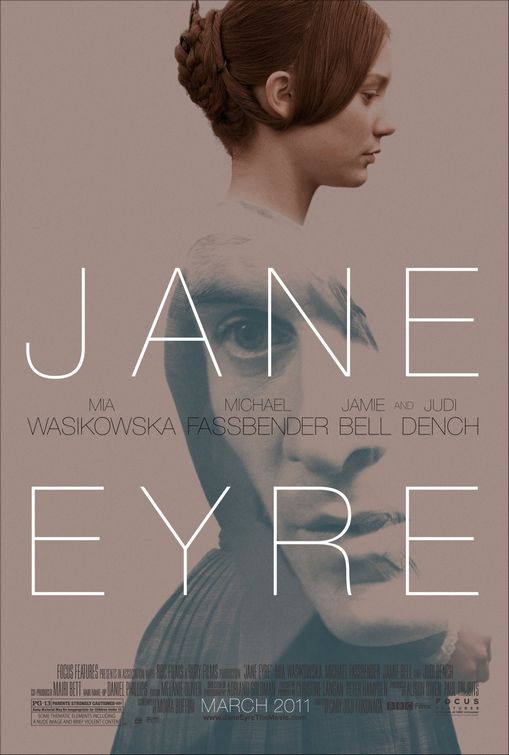
Jane Eyre (film)


So I've been wanting to see the newest adaptation of Jane Eyre basically ever since I heard they were making it. It had a limited release, so I didn't get to see it in theatres, but I finally got around to getting it at the library. And considering that I was like, 350th on the list, I've been waiting a LONG time to see this movie.

I was very prepared to fall in love with this movie. For one, the trailer seemed like it was going to accurately capture the gothic feel of the book. Jane Eyre was (and still is) creepy and scandalous. I mean, so much so that Charlotte Bronte had to publish it under a different name because she thought people wouldn't believe a woman wrote it (well, for other reasons too). I'm not saying I didn't love the movie, not at all. But Jane Eyre is my second favorite book in the world (the first being Gone with the Wind). As an adaptation of the book, however, I think this film is only so-so. Granted, it's a long book, so some stuff has to go when a film is being made. But the whole Blanche Ingram storyline is completely glossed over, and I think that cuts out quite a bit of characterization of both Jane and Rochester. I love any scene where he's trying to glean information from Jane either about himself or about her life. That's how he falls in love with her, after all.

However, the acting in this movie is FREAKING BRILLIANT. Mia Wasikowska is homely-but-pretty enough to make a good Jane, and she displays the right balance of strength and insecurity that is Jane Eyre. I think in movies there's a tendency to make Jane too confident and secure in her decisions, and that's just not the case in the book. Jane does doubt herself. While she may have bursts of brilliance, every move she makes is not as deliberate as some film versions seem to suggest. Mia's portrayal of Jane shows her vulnerable side without losing that inner strength that endears a lot of people to Jane Eyre as a character. Side note: Mia has the TINIEST waist I've ever seen. I sort of noticed it when I saw Alice in Wonderland, but damn. She looks amazing in this movie.

And let's face it, Dame Judi Dench is a perfect Mrs. Fairfax. She's the right amount of motherly and nosey for the part. Plus, even though she's a major star, she plays in the background perfectly. With so much gravitas, it would have been easy for her role to have been greatly exaggerated, but it was played with just the right amount of subtlety. Nice touch.

And Michael Fassbender. Oh my God. I will forever picture him as Mr. Rochester now. People gave Fukunaga flack for casting Fassbender because he's "too pretty," but I disagree. Yes, Fassbender is good looking, but he's not classically handsome--and that's how I've always pictured Rochester. Not classically handsome, but not necessarily ugly. Interesting looking--and Fassbender most certainly is just that. Not to mention that Fukunaga's cinematography and styling make it so Fassbender has those rough edges that Rochester is known for. Fassbender's portrayal of Rochester is SPOT ON. I mean, he captured the spirit of Mr. Rochester to a T. He's brash, abrasive, possessive, and, at the appropriate times, a little sketch. And his passion for Jane is SO believable. The scene where he begs Jane to stay is just...oh my God. It's exactly how I pictured it in the book. I mean, they even include Rochester's veiled threats to make her stay. Wasikowska is no slouch in this scene, either--her physical portrayal of Jane's conflict is perfect. Once again, I think there's a tendency to play Jane here with ABSOLUTE resolve that she's leaving, but Jane clearly has her doubts. Wasikowska plays it as if Jane just barely has the strength to do it, which I think is more true to the character.

On a side note: I was poking around on the IMDb page for the film, and I noticed a reviewer saying they were disappointed that the movie didn't include the Wide Sargasso Sea interpretation of Bertha. This is something I do not agree with at ALL. While I love the concept of Wide Sargasso Sea and I've heard great things about the book, considering it part of the Jane Eyre canon just isn't right. Is Rochester as innocent in the whole Bertha incident as he makes himself out to be? Well, probably not. But Jane Eyre is Charlotte Bronte's book. Any portrayal of the story containing elements from outside the novel is not an accurate reflection of the work--even if those elements make sense in the context of the story.

It's one of the reasons I'm not fond of recent film or book interpretations of Dracula. People seem to have latched on to this idea that Meena and Dracula have this extremely sensual, intense love affair. And true, there is some sexuality between those two in the book--but she's not love with him. You don't yell "Unclean, unclean" after someone you love touches you. And I think people underestimate just how much Meena loves Jonathan. I honestly believe she wouldn't do that him. She just wouldn't.

Anyways, I digress. I enjoyed the movie. It's just about 2 hours long, and I didn't feel like my time was wasted. And the interactions between Jane and Rochester, the sparks that fly between them...it's all so authentic. I never once doubted their love for each other, which is something I've done in other film adaptations of the book. There was commitment to and understanding of these characters, and it really shined through. While I don't necessarily agree with all the story cuts that were made, the acting alone makes it well worth the watch.

Wednesday, September 7, 2011

34/100: Sisterhood Everlasting

So. It's been two months and 13 books since I last posted. My reading pace has picked up a little, but I sincerely doubt I'll make 100 books by December 31st. But I'm okay with that.

So what has raised me from my silence. This gem:


Now, I read Sisterhood of the Traveling Pants when I was about 15 or 16, right when it first came out. And I dutifully followed the series, but by the 4th book, I was getting a bit tired of it all because I felt like the characters were making the same mistakes and having the same crises all over again.

So admittedly, I was skeptical when I found out about about Sisterhood Everlasting. So skeptical that I actually didn't even know it existed until I saw it on the Most Wanted shelf at work. Not knowing a new book in a series I've read is coming out is highly unusual for me. But I thought that for old times sake, I should give it a try. It takes place 10 years after Forever in Blue ends, but I still wondered, were these girls going to be making the same mistakes AGAIN?

Turns out, yes and no. The Sisterhood does make some of the same mistakes they did before, but in the context of this novel, it all makes sense. Life should be messy for these women. This is where they're supposed to be in life.

I'm genuinely surprised at how much I enjoyed this novel. It is easily the best (new) book I have read all year.

I don't know, maybe it's because I'm in my 20s now and I can relate to these girls in a way I haven't been able to before. How sometimes we can be lost, even when we're supposed to be adults. Sisterhood Everlasting spoke to me in a way I haven't been spoken to in a very long time.

The whole time I was reading the book, "Arms" by Christina Perri was playing in the back of my mind. It fits the theme so perfectly. Like, eerily so:


This book. This book.
It broke my heart and put it back together again.
It does something completely ballsy in the first 50 pages and makes it work.
It was the first book in a long time that I started and finished in one day.
I loved and devoured every single word.
I haven't felt this content after finishing a book in a long time.

I love it all :D

Books Read: 34/100
Currently Reading: Between books

Monday, July 4, 2011

21/100: Smokin Seventeen


So for a very long time, I was very much against reading anything by Janet Evanovich. Mostly it was because of my library page weirdness, and since she has about a million books on the shelf, I had to hate her on principle.

But one day in the summer before I went to college, for reasons that I for the life of me cannot remember, decided to try her out. I read One for the Money in about two days, and I was hooked. I managed to get though books 2 and 3 of the Stephanie Plum series, but after that I started college and well, you know how that goes. It wasn't until the beginning of last year that I decided to make it my goal to finish the series. That was when I decided to get on the reserve list at the library for Sizzling Sixteen, and that gave me the incentive to catch up. So from January to June, I read the first 15 books in the series. So by the time I actually read Sizzling Sixteen, I was a little burnt out on the whole series. But Janet Evanovich only releases one book in this series per year, so I figured a year's absence would make my heart grow fonder. Or at the very least, less burnt out.

As the release of Smokin' Seventeen approached, I'll admit, I got excited. It's nice to have a new book to look forward to! But when I read it, I began to realize something: I'm kind of over it.

Don't get me wrong, I still enjoyed the book. Had a few laughs here or there, and I was interested in the main storyline (although I had the killer picked out practically the page after he was introduced, but this isn't Agatha Christie here or anything, so I don't really expect to be surprised by the mystery of the book). But...it was just a little same old, same old.

What's irritating me about these books is that they're all starting to feel like the same book. Stephanie gets herself into trouble and doesn't listen to advice from anyone, she and Lula try to catch an FTA or two and it goes horribly awry, Grandma Mazur causes trouble at a funeral, and Stephanie continues to agonize over the great Morelli vs. Ranger debate. Oh, and whoever the killer is decides to try and kill Stephanie because she's too nosy. To be quite honest, books 11-17 all run together because they're essentially the same book. Look, I give all the credit in the world to Janet Evanovich. She has unfailingly released a book about this character every year since 1995. That's impressive. She's discovered a formula for literary success, and power to her for that. But it seems like she's stuck in a rut. She's sticking to that formula to a T.

And honestly, I'm getting a little tired of it. Stephanie makes no progress a person. And look, I get that this isn't Literature with a capital "L", but that doesn't mean there can't be some development. Is Evanovich afraid that if she actually makes Stephanie get married or have a kid or move in with someone that the series is going to go to hell? The Moonlighting Curse does not not apply to books. Seriously, I'm real tired of this Morelli vs. Ranger crap. Stephanie is a grown-ass woman. Choosing a man shouldn't be this hard--especially when Morelli is the most obvious choice on the face of the earth.

OH MY GOD, THE STEPHANIE PLUM SERIES IS SUFFERING FROM THE REVERSE MOONLIGHTING CURSE!!! (The Reverse Moonlighting Curse, by the way, is when a series suffers when the two leads DON'T get together. See: the first half of season 6 of Bones). Seriously, if I have to deal with this high school relationship dramaz for another book...this whole relationship is just stagnating. If I want to read the exact same book over and over, I'll just read the first one, because that one is still, in my mind, far and away the best one.

I guess the last straw for me was the ending of this book: Stephanie has received a plane ticket to Thailand and enough money to purchase a second ticket for the man of her choice. She decides who she's going to take with her, but we as the readers don't know who that is. Which would be a great cliffhanger and all, if the EXACT same thing hadn't happened at the end of High Five. Seriously. At the end of that one, Stephanie has called a man over to her apartment, but we don't find out who it is until the next book. So that just means that 11 BOOKS LATER, she's in the exact same place. Dear God in heaven. I thought that maybe it seemed worse for me because I had read all the books in a row, but then I realize it's probably worse for people who have been reading the series since the beginning (having watched Bones from the very first episode, I can attest that the longer you've been waiting for something to happen in a fictional setting, the more frustrated you get when it doesn't happen. So I can only imagine).

It's this same reason that I've kind of gotten away from the Shopaholic series by Sophie Kinsella. I really enjoyed it in the beginning, and even though each of the books has a completely different scenario, they actually all have the same plot. Becky never learns any semblance of self control. I mean, even just reading the synopsis for Mini Shopaholic, I can tell that it's going to be the same story: Becky can't help herself, and this gets her into all kinds of trouble with Luke, but in the end she pulls it all together and saves the day. At the beginning of the series, Becky was poor and living in a crappy apartment with no boyfriend, and now she's married with a kid. But she's still doing the EXACT same things she did back in the day? You can see how that would be frustrating.

Sigh. Like I said, I still enjoyed the book. But I'm starting to feel like I'm only reading the Stephanie Plum series out of obligation instead of because I actually WANT to. At the very least, I'm only glad there's one of these a year. Okay, not THIS year, since Explosive Eighteen comes out in October, but still. Maybe it's because I'm still coming out of my bitter old lady reading mood. But it's still a little sad, because I reallly did enjoy the series quite a bit.

But I'm not giving it up for lost. Things can change. I mean, one can only hope.

Friday, May 27, 2011

18/100: Jane by April Lindner


I know I said I was trying not to be negative anymore, but I’m granting myself an exception, because Jane Eyre is my favorite novel, right after Gone with the Wind.

This book. Oh, this book. Jane by April Lindner is a modern-day version of Jane Eyre. And…it….well, just read on and you’ll see.

Jane suffers from the problem of trying to be too loyal to source material. The back of the book has the tag “What if Jane Eyre fell in love with a rock star?” Well, the fact of the matter is, that’s really not what this book explores.

Basically, Jane is a line-by-line remake of Jane Eyre, with updated language and situations. An extremely loyal remake, if you will. Like the most recent version of The Karate Kid. Actually, it’s exactly like that.

Look, in theory, I think this is a good idea. If you’re not used to 19th-century literature, Jane Eyre is a little difficult to approach. And so at first, I was digging all the updates. They made sense, they felt current…I had hopes.

But midway through the book, I’m like, okay, if I wanted this story, I’d read Jane Eyre! I don’t feel like April Lindner is adding anything new to the story, or at the very least, exploring the nuanced facets of the original that Charlotte Brontë, couldn’t explore because of propriety. Nothing. It’s just an “updated” version of Jane Eyre. I was thinking it’d be more along the lines of Thousand Acres or The Story of Edgar Sawtelle. You know, retellings instead of remakes.

In order for an adaptation to be good, it needs to improve or expand upon the original. Take ideas from the book and blow them up. A really good example of this is the film version of Dian Wynne Jones’s Howl’s Moving Castle. Miyazaki’s version expands on small ideas that Jones had in her novel, and deemphasizes the ones that wouldn’t work well in film. It connects with the source material, but distinguishes itself enough so that you can enjoy both of them in different but equal ways.

That’s the type of feel I expected from this book. For it to expound upon ideas in the original while staying true to the spirit of the story. That’s a tall order, sure, but that’s what makes these books so enjoyable when they’re done well.

Because of her unflinching loyalty to the book, certain scenes, when placed into a modern context, simply do not make sense. Or characters stick so steadfastly to their Jane Eyre counterparts, things they do simply don’t make sense.

For example: Jane and Nico (the 21st century version of Rochester. He’s a rock star) falling in love. I felt like Lindner’s Jane falls in love with Nico too fast. It felt like Lindner was following her Jane Eyre outline, and “here’s where Jane Eyre fell in love in the book, so here’s where my Jane falls in love.” I mean, I could see Jane having an attraction to Nico at that point, but ready to hop into bed with him, like 5 seconds after he says “I love you?” Nope, I don’t believe that for a second in this book.

And when they go shopping for clothes? When Rochester does it, it makes sense. Keeping up appearances was tantamount. But when Nico does it? Tway it’s written, it makes it seem like he’s just had this huge personality change. Which then makes him seem like a massive douchebag. And the following scene makes his relationship with Jane seem very…physical, rather than emotional or mental. Which in turn makes him look like one horny fuck; e.g., douchebag.

For obvious reasons, all the school/early days is omitted in this version. But that is very important to Jane’s characterization. You know that from an early age, Jane Eyre is a badass. She’s got a pair of brass balls on her, and she really doesn’t give a shit about what others think of her.

We don’t get that from Lindner’s Jane, so when she decides to stand up to her siblings, it feels false and very out of character. Lindner’s Jane is a mouse, and when she does things like speak her mind, it doesn’t feel true to the character. For example, the “am I handsome” question. In Jane Eyre, Jane is very matter of fact about her answer. I mean, on some level, she knows she shouldn’t say it, but she doesn’t regret her candor. She owns her honesty. The same isn’t true of Lindner’s Jane. Jane is like “oh, my bad, I wish I could take that back.”

And I think these are CRUCIAL events that Lindner missed out on. Because of those experiences in childhood, we know that while Jane Eyre is generally a rational person, she has a fire in her, which causes her to act with her heart on several occasions. But because we don’t have that characterization with Lindner’s Jane, I don’t believe it when she acts with her heart. She’s far too pragmatic for that.

But above all else, Jane made me realize just how important the socio-historical context is to Jane Eyre. While it is still freaky to lock your wife in the attic, on some level, we get that Rochester is a victim of circumstance. Sure, he could have made some better life choices, but once he married Bertha, he was stuck with her. Divorce really wasn’t an option. And mental institutions pretty much meant a death sentence back then, so Rochester looks like a REALLY good guy by taking care of her.

Lindner tries to make out like Nico is a victim of circumstance but that just doesn’t ring true. When I started reading this book, I said that there better be a DAMN good reason that Nico locked Bibi (Bertha in this book) in the attic. And you know what? There isn’t. An institution would have been a FAR better place for her, especially with all the advances in medicine. And sure, some people aren’t responsive to treatment (this is, in fact, the entire basis of the FABULOUS play “Next to Normal”), but there’s plenty of experimental treatments and trials that Nico could have easily gotten Bibi in to (side note: if the current nurse can’t get her to take her pills, HIRE A NEW NURSE. Seriously, not that hard). Also, it’s not like when a girl gets married, she suddenly becomes property of her husband anymore. Presumably, Bibi had some sort of family that would (I hope) want some sort of say in her care. So for Nico to lock her up like that? CREEPY AND WEIRD.

Nico explains that he didn’t know that Bibi had schizophrenia when he married her, and he got her into all sorts of drugs, which may have exacerbated her illness. He felt obligated to her. And on her lucid days, he’d see glimmers of the woman he fell in love with. I get that. That’s perfectly sound. But he knew early on that Bibi was lost to him. If he planned to take care of her regardless, then divorce shouldn’t matter. But according to Nico, “If I sent her away, the press would have gotten wind of it. ‘Rock Star Hides Wife in Mental Institution.’ I’d be the villain.”

Look, it’s 2011. If Charlie Sheen can act like a crazy mofo and still come out relatively ahead, then one rock star can divorce his mentally ill ex-wife.

Jane puts it best: “All these years you chose to stay married to Bibi. That tells me something.” This is something we don’t get in the original—it’s not like Rochester wanted to stay married to Bertha. He was in a position where divorce would have been nearly impossible. Nico, being a man of the 21st century, has a choice. Now, of course, Nico’s defense is that he “owed” it to Bibi, but you know what? This day and age, it’s okay to take care of someone even if you’re not related to them. It’s admirable, even.

In fact, that would have made Nico come off a whole hell of a lot better.

And Nico’s explanation of why he didn’t institutionalize her doesn’t hold water. He said that they were either “bad” or “worse.” Which may be true if you’re a ward of the state and have to go into a state-run hospital, but Nico is Oprah rich. He can afford the best for Bibi. It’s like Lindner was using the One Flew Over the Cuckoo’s Nest view of a mental institution, and that just isn’t true anymore. I’m not going to say that mental illness is completely without stigma in this day and age, but compared to what it used to be in the period in which Jane Eyre was written, it’s practically nothing.

That’s not to say that Nico had to be divorced in this story. It could have worked if they had been married. I saw a very moving story on 60 Minutes about how one of the reporters was still legally married to his wife, but he was living with another woman. His wife had early-onset Alzheimer’s and while she knew she had a husband, and she loved him very much, she ceased to recognize him. Although the reporter looked pained to see his wife slipping away, he knew that she wouldn’t want him to stop living. And he would want her to do the same if the roles were reversed. So that’s what he did. It was romantic and tragic all at the same time.

But Nico’s story is hardly so noble. Basically, he didn’t want the press finding out about his wife and for it to ruin his career. I mean, I’m oversimplifying it a bit, but really, that’s kind of what it boils down to.

So because Nico’s reasons for hiding Bibi away seem really shallow when put into a modern-day context, this sets off a chain reaction that really makes Lindner’s Jane look like a damn fool for going back to Nico. I’m sorry, I don’t care what the circumstances, in 2011, nobody is ever going to think that locking someone in an attic is an understandable thing to do. And really, the public still likes this guy after they found out he keep his ex wife hidden from the world? Do you know where stories like that end up? On 48 Hours. And not in a flattering way, either.

I mean, it got so bad that I ended up rooting for St. John there at the end, even though I knew he eventually was going to douche it up. At least he put it all out there, even if he was a bit crass.

Sigh. I could go on and on about all the problems I had with this book. For instance, Nico is taking care of Maddy (the Adele character) because her mother left her alone in hotel rooms, so Nico sued for full custody and won (this version makes it clear that she is his daughter). Yet he somehow thinks keeping a DANGEROUS SCHIZOPHRENIC in the attic is better parenting?!? At least Rochester had the excuse of Celine being dead. And some of the attempts to be modern just…what is this I don’t even. I mean, at one point in time, a satin-lined mahogany box of condoms come into play. I am not even making that up just a little bit.

At the end of the novel, April Lindner has an endnote about why she decided to write this book. She talks about her love for the original, and how she was inspired by all the adaptations of Pride and Prejudice that were coming out. She wondered why nobody had tried to modernize Jane Eyre in a similar way, so she set out to do just that.

Like I said, the problem is that she is too loyal to the source material. To the point where characters do and say things that make no sense in a modern-day context. I appreciate what Lindner was trying to do here, I really do, but it just doesn’t work. Like, at all.

I think the reason that Jane Eyre hasn’t been modernized is that the story is so universal, even 150 years after its initial publication. Jane Eyre is still a badass by today’s standards. And because we have socio-historical background, keeping your wife in the attic—while a little weird—is still understandable. We sympathize with Rochester, even though he lies. And I’ll allow that some elements of the Jane Eyre story would work in a modern context.

But in 2011, there is no excuse for keeping your crazy wife in the attic. There just isn’t.

Friday, May 20, 2011

Why I'm Reading a Nora Roberts Book

So I'm currently reading a Nora Roberts book.

To be honest, I still find this a little shameful. Look, I have no objection to people reading Nora Roberts. But...well, to explain the shame here, I have to talk about working in a library.

You have to be a very special person to get five shelves devoted to your books in the library. Many authors have four shelves (Stephen King, Agatha Christie, Robert B. Parker, Janet Evanovich, Louis L'Amour), but to have five is a real accomplishment. I can only think of four people who win this claim: James Patterson, Danielle Steel, Debbie Macomber, and Nora Roberts.

Workers who shelve books hate these people. Look, it's nothing personal towards them or their books. But there are just so freaking many of them. And oftentimes, there's series involved, and then you have like, 12 books with essentially the same title that need to be shelved and depending on they way the books are cataloged, this isn't as easy as one would think. Especially if there are numbers in the title.

So really, my hatred of these authors derives from the fact that I have to deal with them and their books on a near-daily basis. Plus, there's an element of logic in there: These authors aren't terribly old, so they're churning out books like there's no tomorrow. Which means that it's clearly about quantity and not about quality (yeah, I'm looking at you, James Patterson. The facts speak for themselves here: he signed a 3-year, 17-book contract with Hachette. The man's a machine. That's not to say that I don't go to bed every night and pray that God turns me into James Patterson in the morning, but still. It's the principle of the thing). More books means more shelving for us. So over the years, I sort of came to the decision to not read books by these authors. Just as a professional courtesy, you know? I know, it makes no sense.

But let me reiterate what I stated early: I have nothing against these authors personally, or the people who read the books. But I do realize that I'm still a tad judgmental about people's reading habits.

But if library school has taught me anything, it's that I need to be less judgmental of what people are reading. So I finally bit the bullet and checked out a Nora Roberts book.

I picked Vision in White, since I had heard it mentioned in various blog posts in the span of a week or two. Also, it was available as an ePub from Overdrive, so I could check it out without shame (yeah, I know, still judgey. Baby steps here, people. Baby steps).

It's...about what I was expecting. I'm about halfway through. I mean, it's not terrible. The writing is okay, and the dialogue is a little stilted, but I've definitely read worse. My major problem is that I don't feel like there's much of a plot. Yeah, there's two people falling in love, but there's absolutely zero drama. Yeah, the main character has mommy issues, but with her mother hundreds of miles away, they don't seem like much of a threat. I'm just waiting for something to happen. I'm not holding myself to finishing the book. I haven't quite decided if I will or not. Hey, it happens.

But the important thing is, I see the appeal of Nora Roberts now. It's harmless fluff, and a great vacation/beach read. And sometimes, that's all people want, and there's nothing wrong with that.

So Vision in White may not be for me. But I'm more than willing to try another Nora Roberts book. She has plenty to choose from :)

Books Read: 17/100
Currently Reading: Vision in White by Nora Roberts

Sunday, May 15, 2011

I'm Back (I Hope)

To say that I've been neglecting this blog and this project is a gross understatement. As the list attests, I've only just finished book #17. At the rate I'm going, I'm not going to make it.

I've been trying to figure out what the hell happened. I was so excited about this project at the beginning of the year. When I did my 365 Project last year, I rarely missed a day, and by this point in the year, taking a picture of myself each day was just a habit. But the same thing didn't happen with this project. And I've been trying to figure out why.

At first I thought it was that I was just reading crappy books. I started the year off with Mockingjay, which I just hated. Then I read a book to cleanse my palette, but then I read Water for Elephants, a book, which, the more I think about it, the more I hate it. But looking over my reading list since January 1st, I've read some good books, some by my favorite authors. So it couldn't just be the books. And that's when it hit me.

It was me.

During my reading of The Weird Sisters, I began to consider something. The Weird Sisters is about these three sisters who all come home after they find out their mother has cancer. Their father is this emotionally distant professor who finds more life in Shakespeare than he does in the outside world. The thing that links these very different girls together is their love for reading. On some level, it is a book about the love and fundamental power of reading.

Which got me to thinking about my own reading habits, and I came to the conclusion that being an English major in college nearly ruined my love for reading.

Look, I love the fact that I have a BA in English and I would not have had it any other way. But all that critical thinking about literature bled over into my recreational reading, and it was causing me to hate books. I first noticed it when I read the book Death in Daytime last fall. Admittedly, I was only reading this book because it was written by Eileen Davidson, who plays Ashley Abbott on the Young and the Restless. But I still expected it to be somewhat decent. It SO is not. The writing is amateurish and there's so much telling and not showing and SO MUCH UNNECESSARY DETAIL. Seriously, it was a struggle to get through. While I was reading it, I tore every single chapter to shreds. But I didn't think much of it, since it was a fun little book, and by a celebrity, no less.

But then I started to do it to every single book I read. And look, I get that not every book published has phenomenal, A-grade prose. Some books really are terrible. But I couldn't let anything go. I would analyze every single thing to death (as my previous posts this year attest), and it would consume me so much that I couldn't really enjoy reading any more. In a way, I started to become wary of reading, because I started to expect to be disappointed by books. I even started to wonder if I could ever enjoy reading again.

And as someone who will live and breathe the library every single day for the rest of her life, I know that that's no way to live. But I kept reading, and books continued to disappoint. The tipping point for me was reading the book Matched. Don't get me wrong here, the book has its fair share of flaws (the biggest of which is that characters would often jump from point A to point C without any explanation as to how they got there), but I couldn't even enjoy the act of reading the book because my mind was so busy analyzing the crap out of the terrible writing. After Matched, I don't think I read a book for a solid two weeks. Which for me, is a very long time. Perhaps the longest I can ever remember choosing not to read anything.

A few months ago, at the beginning of this reading crisis (as it were), I happened to catch an episode of Bones while my brother was watching the series. I'd seen this particular episode probably three times already, but this time around, something Angela said just stuck with me: "You need to learn to enjoy things as they are." That kept with me for awhile. And it wasn't until last week or so that I really connected the dots. I was taking every book far too seriously and I wasn't enjoying things as they were. I just needed to take a step back and recognize that I was reading for entertainment. Not for school, not for my career, but to have a good time. So the pressure needed to come down. Way down.

I needed to get back into the swing of reading. But nothing in my stack of books interested me, so I did the clean sweep. Took everything I had back to the library, and got an entirely new stack of books. I had a bit of a misstep, when my first book was Cat of the Century by Rita Mae Brown.

Let me explain: I have never read a Rita Mae Brown book before, and never intend to read another, but this particular book happens to be centered around William Woods University, which is just across the street from Westminster College (where I went to school). I just had to know how good old Fulton was portrayed.

Anyways, that book was terrible. I mean, just godawful. There were random tangents about the environment and the economy that had absolutely NOTHING to do with the plot. At all. But I could feel my bad habits starting up again, so I decided not to finish the book. Now, for me to start a book and get more than 20 pages into it and not finish it is very rare. In the past five years, I've done this to maybe 2 books. I don't know, I just feel...obligated to finish it, you know? Anyways, that's neither here nor there. So I picked up the next book in my pile.

I fully credit Diana Wynne Jones and Howl's Moving Castle for helping me get my reading mojo back. This was a re-read for me, but it's been so long since I read it the first time that I don't really remember a lot of what happened, so it was like a new book. And after I finished it, I realized that I hadn't made a single complaint about it while I was reading it. I just read. Enjoyed the book the way it was. And then, I just knew: I could read for fun again. My love of reading wasn't gone forever. Just quelled a little bit, until something could pull me back out. In the week since I've finished that book, I've read two more.

I'm back, baby.

Even though I'm WAY behind, I haven't given up hope on this project. If I can manage 12 books a month, I can do this. And if not, that's okay, too. There will always be more books. And now, I'm finally read to read and enjoy them as they are.

Monday, March 14, 2011

Whitewashing the Hunger Games

One day I'll post my feelings on Mockingjay, and you can see how I REALLY felt about The Hunger Games trilogy. The short version is that I liked the first two books and ABSOLUTELY HATED the last one. But that's not the point right now.

On my Google Reader, I found this article from Jezebel: The Imminent Whitewashing of the Hunger Games Heroine

Basically, the article mentions how Jennifer Lawrence is the frontrunner for Katniss in The Hunger Games movie (which makes me a little sad, since I was totally rooting for Hailee Steinfeld), and Jennifer Lawrence is, of course, very white and very blond.

Now, the article includes the description of Katniss in the book, which is this: "Straight black hair, olive skin, gray eyes." Which, in terms of description, is pretty scant. What exactly IS olive skin, anyways? But I guess people take olive skin to mean "non-white", which, in my opinion isn't necessarily true. I think of "olive" as more of an undertone than an actual color. You can be white as a ghost and have an "olive" complexion. One of my roommates in college was from Chile, and he had what I would describe as an olive undertone to his skin. He was pale, but I would definitely classify the tone of his skin as "olive," You can also be black and have an "olive" complexion.

Furthermore, it seemed obvious to me that the Seam (where Katniss lives) is in the Appalachian Mountain region. Which is a largely white population, even today, after that area has been populated for centuries. Ethnographically speaking, it would make sense for Katniss to be white. But then again, considering that by 2020, the United States will have a population with a fairly even spread of white, black, and hispanic races, it also makes sense for Katniss to be a woman of color.

None of that, however, is the point here. I think the beauty of the term "olive" is that it can mean anything you want it to mean. Which is part of what makes Katniss a great heroine--she could be anybody. You can think of her as a member of your own race, or as a member of a different race. She could be like you or like someone else. That's what made her so beloved by millions of fans.

For me, race was never an important issue of the books. I always saw the class commentary as a FAR more important aspect of the book. I mean, THAT part was so obvious that it smacked me straight in the face. And any sociologist will tell you that it's not JUST about race or class or gender, but that it's a COMBINATION of all factors that disadvantage certain groups.

Okay, I'm getting WAY off topic. I guess my main point is that there's not enough of a description of Katniss in the book to merit all these cries of whitewashing. Because in my mind, "olive" is a neutral descriptor. So in Gary Ross's mind, Katniss looks like a Jennifer Lawrence or a Hailee Steinfeld. In somebody else's mind, she could be a Zoe Saldana. Katniss can be anyone. That's the point.

Also, if you've read ANY interview with Gary Ross about how he's adapting the books, he says he's had EXTENSIVE conversations with Suzanne Collins about the vision he is seeking to put on screen. So if the AUTHOR OF THE FREAKING BOOK approves of the actress playing Katniss, so should you.

Saturday, March 12, 2011

Edit Much?

I don't know if it's because I do so much reading, or that I have a degree in English, but lately, I've been noticing a lot of copy errors in the books I'm reading. Granted, most of them are in my Fundamentals of Collection Development and Management textbook (apparently, librarians are not the greatest spellers in the world. Who knew?) But I've seen a few show up in fiction as well.

Now, these are errors that should be caught in copy-editing. They're not spelling errors; they're usually grammatical errors. And going further, it's usually a matter of a missing word or a subject/verb issue. And for the most part, I can ignore these mistakes. I mean, take my Collection Development book—it's 400 pages long. There's bound to be a few mistakes in there, especially if they fall into tricky-English-rules land. I don't expect perfection when it comes to copy-editing. After all, there's still a very human element to that process and let's face it, nobody's perfect.

However. There are some errors that I've spotted recently that I think occurred more out of laziness than an honest mistake.

There's a rather significant mistake in Delirium by Lauren Oliver, which is what inspired this post. And by significant, I mean, this seemingly innocuous mistake actually serves to undermine the theme of the book.

My previous post gave a brief summary of what the book was about: a world where love is classified as a disease. Okay, so given that information, you'd think that the word “love” would be a pretty loaded word in this book, more so than in any other book. That's why I was able to make note of this incident.

On page 16 of the book, Lena is talking with her aunt about her final evaluation before she is cured, and Lena launches into an “acceptable” speech about her likes and dislikes. She states “I really like children” and when her aunt tells her that she makes a face when she says it, Lena replies, “I love children.” Now, I thought this was a little odd when I first read it, because this is a world where love is considered a disease. It seems rather odd that the world would be used so freely in the novel.

However, Oliver takes great care to construct a world that isn't necessarily in the future—that is, except for the whole “procedure” to remove the ability to love, the world Lena lives in is pretty much identical to ours. No cool medical advances, no awesome pieces of technology...nothing. So, I thought, since this world is so similar to the one in which we actually live, she's keeping with the colloquialisms. Perhaps Lena is just being sarcastic when she says “I love children,” in response to her aunt's nagging.

Except. When Lena is out in the Wilds with Alex, he shows her the stars. On page 298, he asks her what she thinks of them, and this is the passage that follows:

“I love it.” The word pops out, and instantly the weight on my chest dissipates. “I love it,” I say again, testing it. An easy word to say, once you say it. Short. To the point. Rolls off the tongue. It's amazing I've never said it before.


Wait, what? Lena has said this word before, 212 pages earlier. And in a lighthearted, meaningless way.

I don't think it could be argued that Lena use of this word on page 16 is a simple case of her just being a teenager and being sarcastic. This passage on page 298 clearly attests that Lena knows that this word has meaning. And that she's never used it before, until now. Allegedly.

Talk about a huge, gaping error. Now I realize, not everyone is going to nitpick or remember like I am, but sometimes, it's the little things that can completely derail a story. My thesis advisor told this great story about how one of her students wrote a decent story, but that there was this coffee cup that showed up in every scene. Which doesn't seem like a big deal, but the action of the coffee cup wasn't consistent. One moment the character would be pouring a new cup, the next she'd be rinsing it out because it had stayed on the counter all night. This coffee cup was a completely tertiary detail to this story, but because it was inconsistent, it threw focus off the real action of the story and as a result, the fiction lost its impact.

Which, basically, is what happened with Delirium. Once again, I recognize that nobody is perfect, and mistakes do happen. But I know that as a writer, if I were going to attach that much significance to a single word, I'd do a simple ctrl+f to make sure that I wasn't contradicting myself. As the passage on page 298 is written, Lena using the word “love” is a big step in her character development. But because she used the word earlier in the novel, this is basically meaningless. Don't you think, if Lena speaking the word “love” was going to be such a big moment, you'd do a simple ctrl+f search of your manuscript just to make sure you hadn't accidentally slipped it in earlier?

And now that I think about it, I know I've encountered a similar problem in another book recently. I can't remember the specific book or the problem, but I do remember that once I spotted the contradiction, I was pulled from the story and its effectiveness was lost.

Now, the Delirium example that I gave is an extreme one. I guess my point here is that even in a 400+ page book, the little things matter. And people will notice the little things. There's a lot of things you can get away with in a book that you can't get away with in any other form of media. But then again, there's an equally long list of things that you absolutely cannot get away with in books. Minor contradictions, no matter how asinine they may be, are one of them.

Makes you appreciate the job of a copy editor that much more, doesn't it?